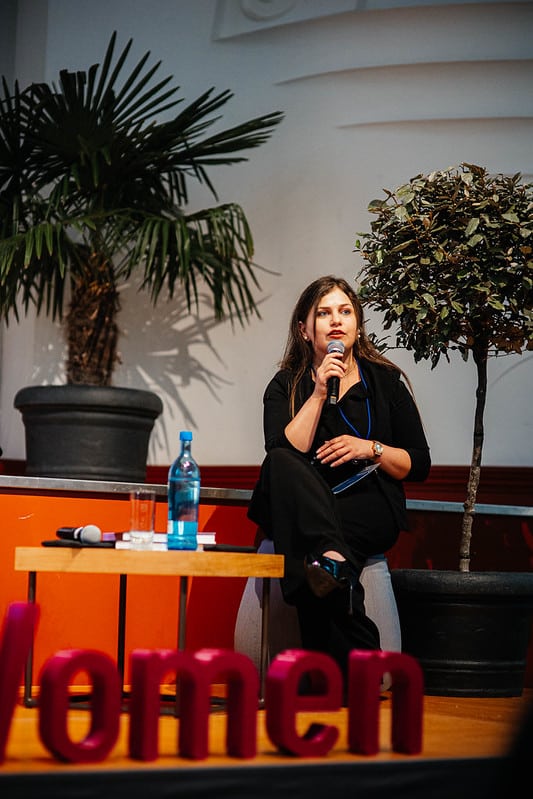
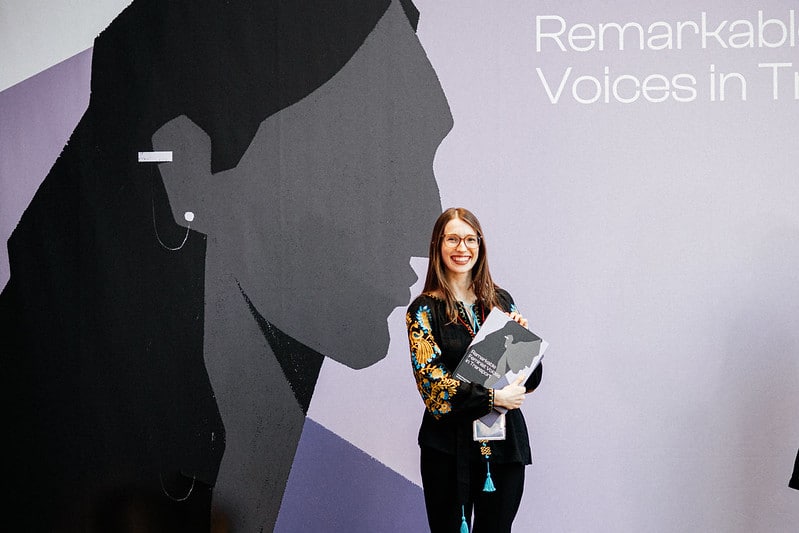
Though Kyiv lies only 1,500 kilometers from Berlin, travel between the two capital cities has been hindered tremendously since the Russian invasion of Ukraine in February 2022. Yet Olesia Kholopik, the Director of the Centre for Democracy and Rule of Law undertook what is now a days-long journey in March 2023 to attend a WomenMobilizeWomen conference celebrating “Remarkable Feminist Voices in Transport” and spoke to TUMI about the mobility landscape in a country currently at war.
“The biggest challenge in our work is the full-scale war in Ukraine,” says Kholopik. “It affects all areas of our society. And mobility can be a means of survival for those who emigrated.”
Even before the war began, road safety and mobility advocacy proved to be a stressful task requiring a long-term way of thinking. Plans such as a rethinking of Lviv’s streets to promote more active mobility methods and add to public transport were already developed prior to the invasion. First Lady Olena Zelenska likewise released a national barrier-free strategy to support everyone, including those living with disabilities in being better able to meet the challenges of daily life, including while using public transport.

“By a barrier-free environment, we mean the absence of obstacles for development, education, work, comfortable life for a person of any gender, age, in any condition,” Olena Zelenska said in 2020 when announcing the program. Today, in the midst of a harrowing conflict, that barrier-free strategy feels even more essential, even if it proves difficult to fulfill at the moment. Yet, for many who have survived the war, that access will be necessary for rebuilding and reintegrating as Ukraine returns to a normal life in the hopefully near future.
At the moment, however, with most politicians and decision-makers focused on the military action, it’s difficult to get some sustainable mobility initiatives, like improved road safety legislation, on the national agenda. All the same, the conflict has made road safety even more important; implementing steps such as slower speed limits could prevent car wrecks helps to keep the emergency responders freed up to assist those injured in fighting.
For now, Olesia is focused on continuing her work toward protecting human lives through greater engagement and advocacy for human rights in mobility. To hear more about her work and the challenges for mobility in Ukraine, you can listen to the podcast episode here.